
Hero and Supporting Garment Roles in an Apparel Capsule
A hero garment carries the clearest collection signal. Supporting garments extend that signal without competing with it. These are working labels, not universal industry categories, so assign them against the same garment set, audience, launch context, and evidence stage.
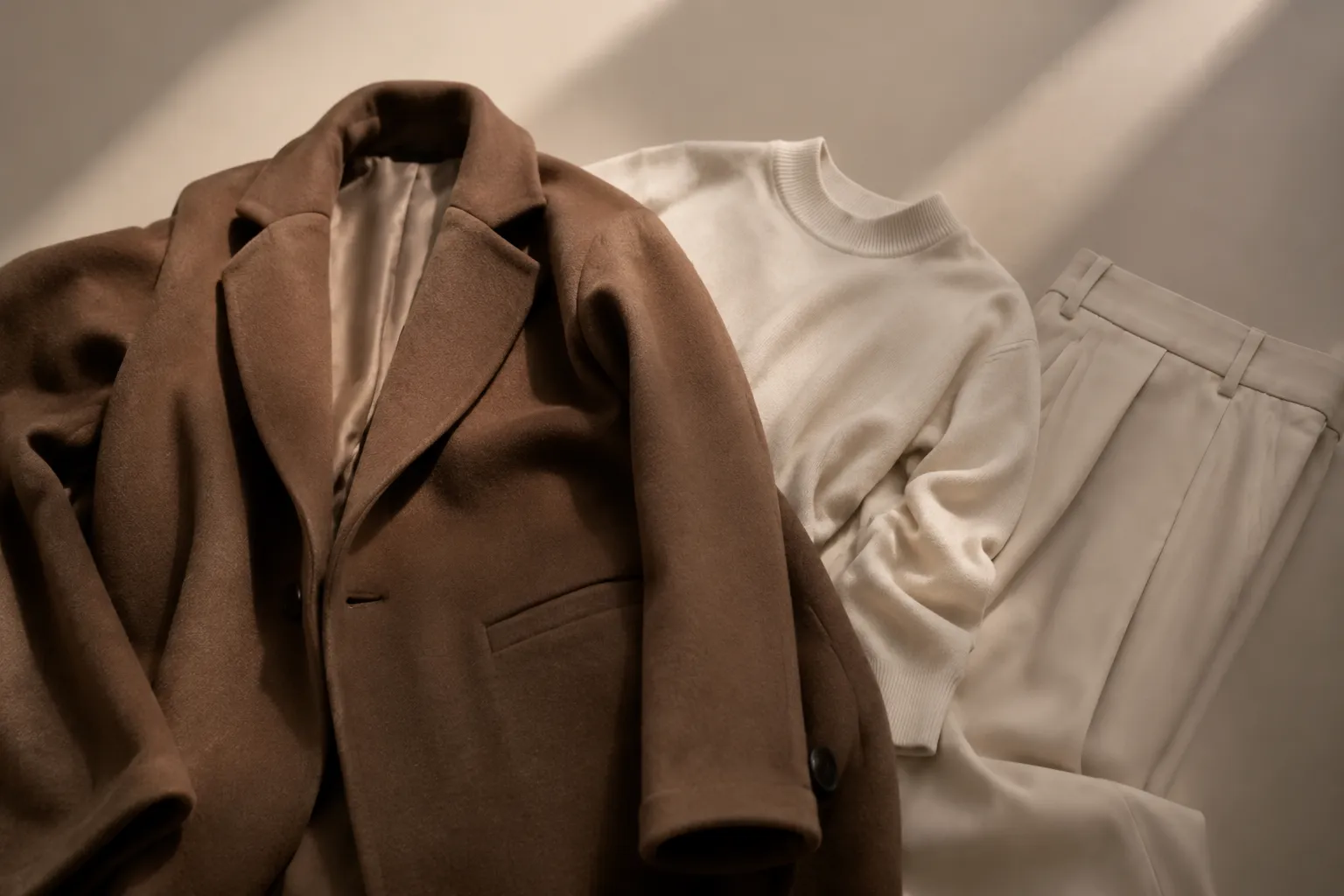
Start with the visible decision: which garment should lead the collection view, and which garments should make that lead easier to combine and understand? A simulated mockup can show intended hierarchy, but it cannot confirm print behavior, provider limits, rights status, marketplace acceptance, or commercial performance.
What the roles mean
The hero garment receives the strongest visual or editorial priority within the capsule. Its graphic, placement, garment tone, colorway, or campaign position gives reviewers the clearest expression of the collection idea.
A supporting garment has a different job. It keeps the collection coherent when the hero is not the only item shown. A quieter graphic, smaller placement, restrained colorway, or simpler treatment may support that role, but none is an automatic rule.
| Working role | Primary review focus | Useful question |
|---|---|---|
| Hero garment | Collection signal and first visual read | Does this item communicate the capsule idea quickly? |
| Supporting garment | Compatibility and collection continuity | Does it work with the hero without copying or competing with it? |
| Shared system | Repeated graphic, type, color, placement, or tone | What remains consistent across both roles? |
The hero is not automatically the most expensive, complex, or high-volume item. The available material does not establish a universal commercial rule for assigning those attributes.
Compare both roles in the same capsule
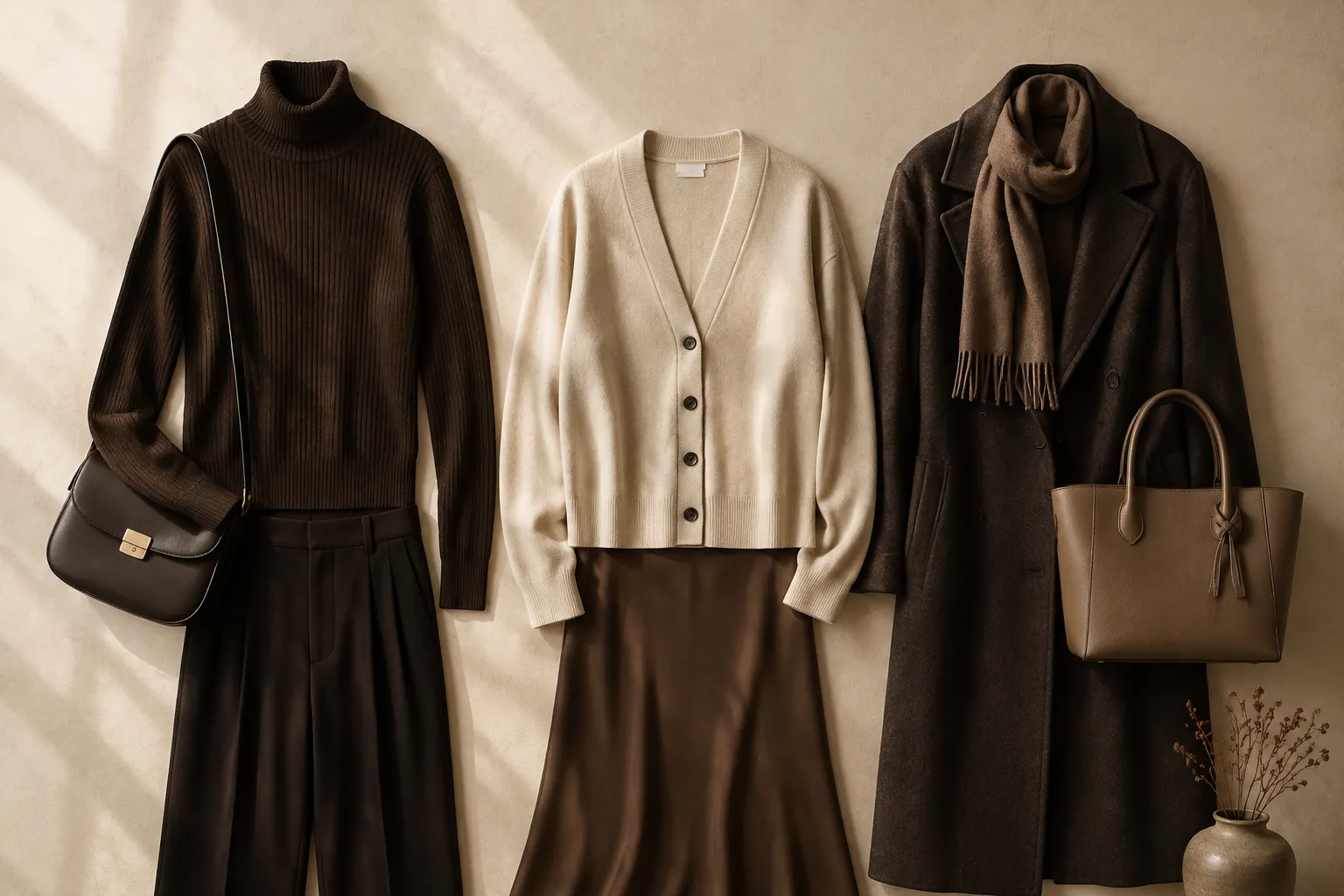
Place the hero and supporting garments in one collection view before judging either design. Use one audience, one campaign context, and one garment set. Changing several variables at once makes the role decision difficult to review.
Check the first read
At thumbnail size, identify which garment receives attention first. Record the visible reason:
- larger graphic area
- stronger contrast against the garment tone
- more distinctive placement
- clearer wording
- more unusual silhouette or colorway
- stronger position in the listing frame
- more prominent use in the campaign asset
This becomes an observed comparison only after the team reviews a defined image set and records the criterion. A personal reaction remains a team preference until the group accepts and documents it.
If both garments compete equally for first attention, the intended hierarchy is not yet visible in the current preview. That does not determine whether the capsule works; it identifies a decision the brief still needs to settle.
Check the shared visual system
Compare the elements that connect the garments:
- graphic family
- type treatment
- illustration language
- garment tone
- colorway relationship
- print placement
- scale
- visual density
- listing-frame treatment
The relationship may be direct or restrained. A supporting graphic might repeat a motif, echo a phrase structure, use a related colorway, or leave more open space around the garment. Record the chosen relationship instead of relying on a general statement that the items “feel cohesive.”
Check the outfit or listing context
Review the garments together wherever the capsule will be presented as a combination. Look for visible consequences:
- one graphic obscures the other
- the garment tones create an unintended clash
- both items depend on the same styling frame
- the supporting item becomes indistinguishable from the hero
- the supporting item introduces a direction absent from the rest of the set
- the pair works separately but breaks the collection when shown together
These are observations about the current presentation. They do not establish customer response or finished-garment performance.
Make the apparel assortment decision reviewable
Write the intended job of each garment in one sentence before revising the artwork.
- Hero: lead with the main graphic in the campaign’s first collection frame.
- Supporting: carry the same graphic language with a quieter placement in secondary listing frames.
- Shared system: retain the same motif and type treatment while varying scale.
Then compare those intended jobs with the current assets. A useful decision record separates three states:
- Intended role: what the team wants the garment to do.
- Visible evidence: what the current concept preview or simulated mockup shows.
- Open confirmation: what requires a sample, provider input, rights review, marketplace guidance, or another responsible party.
This separation keeps a concept preview from being treated as a completed production decision.
Use conditional role decisions
- Keep the garment as hero if it still reads first in the intended campaign frame.
- Move it into a supporting role if its graphic competes with the collection’s main signal.
- Test a second colorway if the current garment tone reduces visible contrast in the simulated mockup.
- Defer the placement decision until the responsible provider confirms the applicable print area or template.
- Request a physical sample when fabric, color, scale, placement, or surface behavior cannot be established from the preview.
- Retain both items as equal leads if the capsule intentionally uses balanced presentation and the brief records that preference.
The condition matters. Without it, a collection-specific recommendation can sound like a general rule.
Observable criteria for garment roles
Collection signal
Does the garment communicate the capsule concept without requiring the viewer to inspect every detail? Label the conclusion as intended, simulated, or observed according to the review stage.
Visual hierarchy
Does one item lead while the other supports it? Use the same crop, scale, background, and listing frame for both garments. A mockup can suggest hierarchy, but physical conditions may change the result.
Compatibility
Do the garments relate through color, graphic language, placement logic, or styling context? Review the full combination rather than comparing only two isolated graphics. A pair may work in one listing frame and break the set in another.
Distinctiveness
Can a reviewer tell the garments apart? Supporting does not mean repetitive. If every item uses the same scale, placement, and graphic density, the collection may lose useful variation. Record the feature that creates distinction.
Asset-stage clarity
- Intended: requested in the brief.
- Simulated: shown in a digital mockup or concept preview.
- Observed: noted during a defined visual review.
- Sampled: checked on a physical sample.
- Approved: accepted by the responsible reviewer for the stated stage.
- Produced: confirmed after production.
Do not move a garment from simulated to sampled or produced without the corresponding evidence.
When the mockup is no longer enough
A simulated mockup is useful for comparing visual roles. Keep external or physical questions open until the relevant confirmation exists:
- Does the placement sit inside the current provider template?
- Does the garment tone preserve the intended contrast?
- Does the material change the appearance of the graphic?
- Does the final print area match the simulated scale?
- Is the artwork cleared for the intended use?
- Does the listing treatment follow current marketplace guidance?
- Has a physical sample been reviewed?
- Has the responsible party approved the next stage?
Current first-party documentation or the responsible production, rights, or marketplace party must supply exact dimensions, process limits, usage terms, and policy requirements. No supplied source confirms those page-specific details.
A physical sample can answer questions that a digital preview leaves unresolved. It does not replace a rights decision, marketplace review, or documented production confirmation.
Worked capsule example
Consider a three-garment graphic set:
- Garment A uses the largest version of the primary graphic.
- Garment B uses a smaller related mark near a different placement.
- Garment C uses a quieter text treatment in a related colorway.
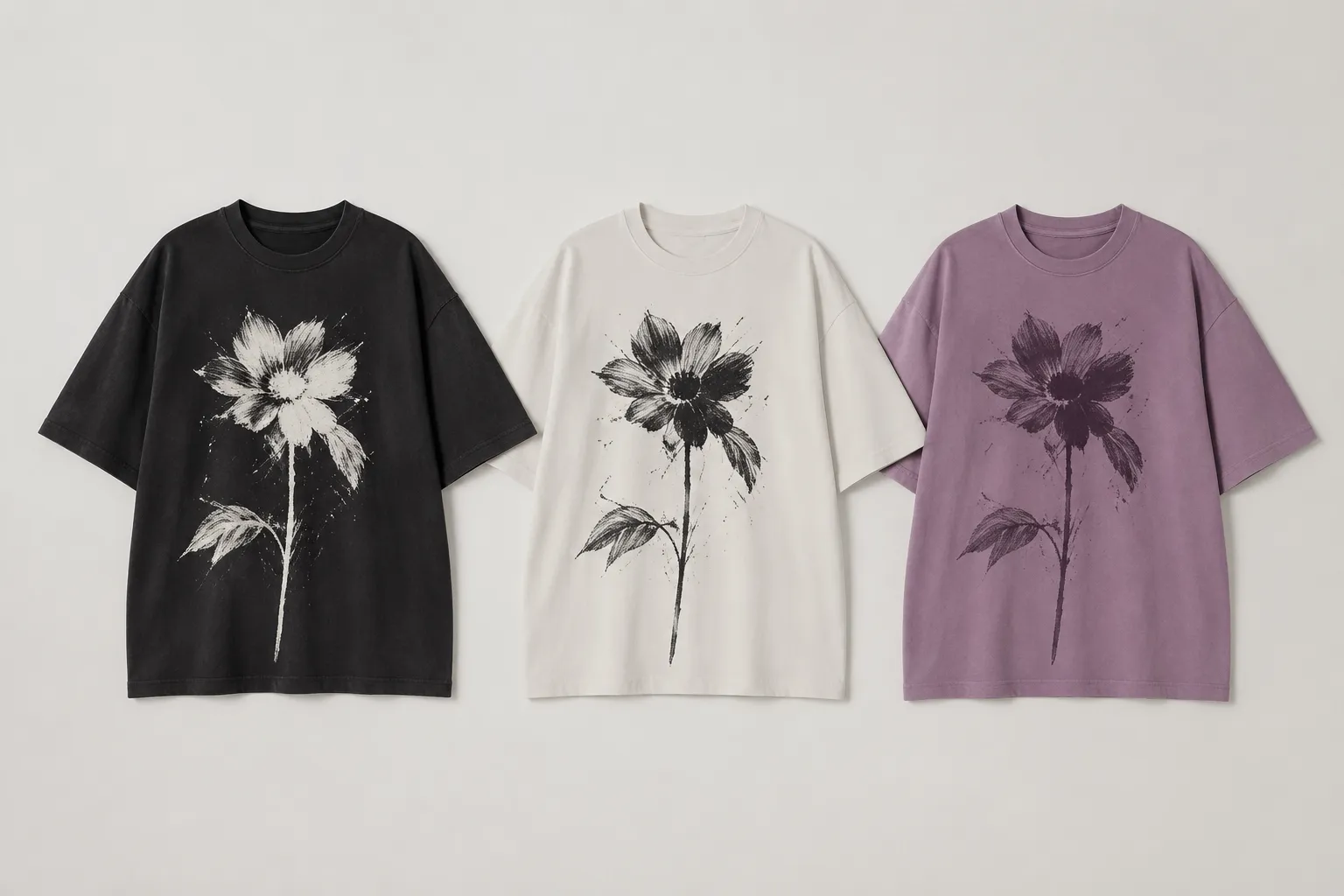
The intended assignment might place Garment A as hero, Garment B as supporting, and Garment C as supporting or an alternate lead.
During the simulated review, Garment B may attract more attention because its garment tone creates stronger contrast. That observation does not require an immediate redesign. It does require the team to decide whether the visible hierarchy matches the brief.
Garment A remains the intended hero because it carries the primary collection message. Garment B currently reads first in the square listing frame because of its contrast. Compare both garments again after the campaign crop is fixed, then confirm physical contrast and placement with a sample or responsible provider.
The record separates design intention from visible consequence and identifies the next review pass.
The garment handoff record
Keep the handoff short enough to review and specific enough to prevent role drift.
| Field | Example entry |
|---|---|
| Capsule name or internal ID | Recorded by the team |
| Garment ID | A, B, or C |
| Intended role | Hero, supporting, or undecided |
| Graphic set | Primary mark, related mark, or text treatment |
| Intended placement | Recorded from the current brief |
| Simulated evidence | Mockup file and review frame |
| Observed consequence | Reads first, loses contrast, or breaks the set |
| Current state | Intended, simulated, observed, sampled, approved, or produced |
| Open question | Provider template, sample, rights, or marketplace confirmation |
| Next responsible handoff | Designer, reviewer, provider, rights holder, or marketplace contact |
| Decision date or version | Team-controlled record |
Do not record “approved” without naming what was approved. A team may approve the visual hierarchy while leaving print dimensions, rights status, or marketplace treatment unresolved.
Common misunderstandings
“Hero” means the item that will sell most
Hero is a planning label for visual or editorial priority within the capsule. Sales performance remains unconfirmed unless supported by a disclosed source and method.
Supporting means less important
Supporting garments can carry essential collection continuity. Their role may be quieter, while the capsule still depends on their compatibility and distinction.
A consistent mockup confirms a consistent produced result
It does not. The mockup shows an intended or simulated state. Material, color, placement, provider constraints, and production conditions require separate confirmation.
Every capsule needs one obvious hero
That depends on the campaign and collection brief. A single lead may suit one campaign frame, while an intentionally balanced collection may assign equal presentation priority. Record the chosen approach as a team preference.
Final decision
Assign hero and supporting garment roles after comparing the same items in the same collection context. Use the hero label for the garment intended to carry the clearest collection signal, and the supporting label for garments intended to extend or reinforce it.
Record what the team intended, what the current preview shows, and what still requires confirmation. The next handoff should name the unresolved question and the responsible party.
Sources
- Retail buyer segmentation based on the use of assortment decision factors - ScienceDirect
- Apparel Retail Product Development: Model Testing and Expansion
- Creating Capsule Wardrobes from Fashion Images
- A RFID-case-based sample management system for fashion product development
- Fashion Retail Master Data Model and Business Development